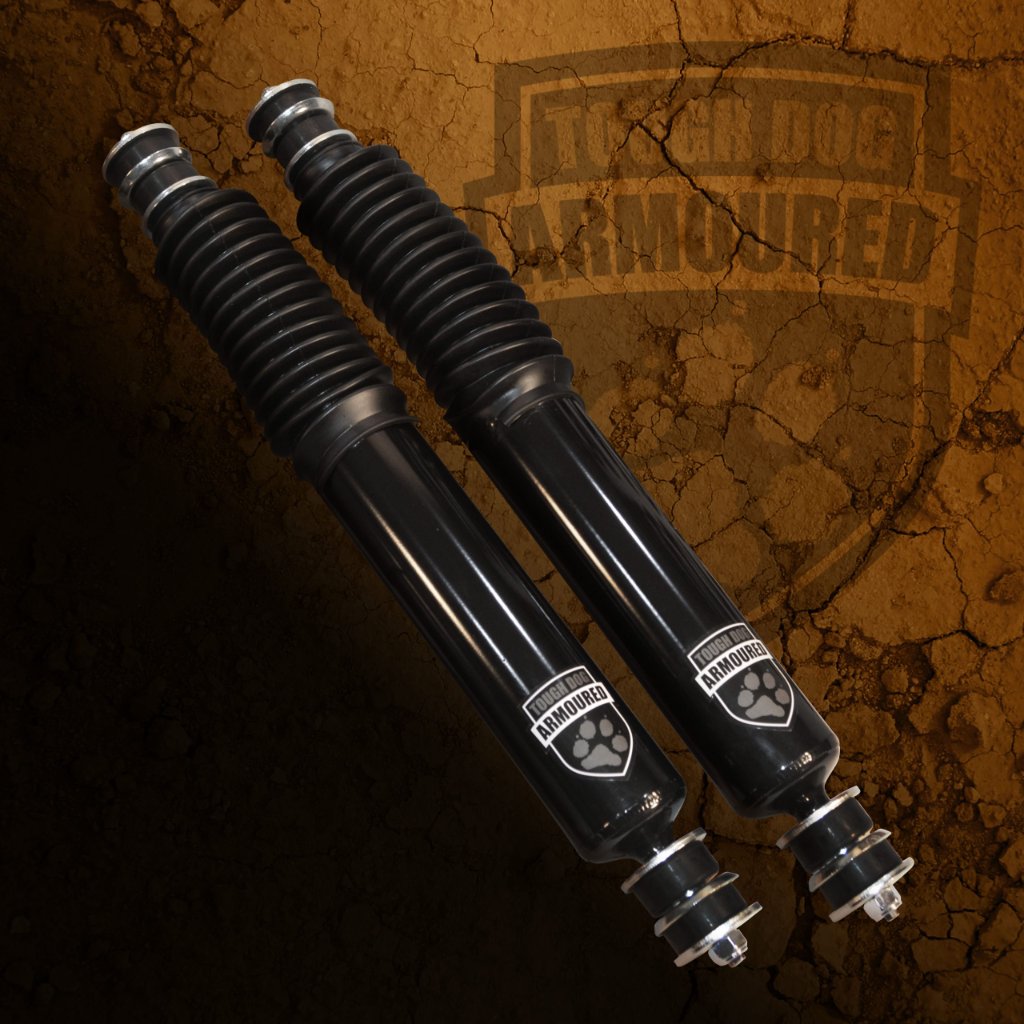
Armoured vehicles are designed to survive extreme conditions—blast events, hostile terrain, heavy payloads and sustained operational use. However, one of the most persistent and underestimated threats to vehicle performance and crew wellbeing is vibration.
Excessive vibration affects more than comfort. It accelerates mechanical wear, degrades electronic systems, increases crew fatigue and reduces long-term mission effectiveness. In modern defence operations, where vehicles are expected to operate longer, faster and under greater load, vibration control has become a critical engineering priority.
At Tough Dog Armoured, reducing vibration is not a by-product of suspension design—it is a deliberate outcome.
What Causes Vibration in Armoured Vehicles?
Vibration in armoured vehicles originates from multiple sources, often acting simultaneously:
Terrain-Induced Vibration
Corrugations, rubble, potholes, washouts and uneven tracks generate high-frequency oscillations. When suspension systems cannot adequately control these inputs, vibration is transmitted directly into the chassis.
Vehicle Mass and Armour Load
Armour plating, ballistic glass, weapon systems and communications equipment significantly increase vehicle mass. Greater mass amplifies suspension forces and increases oscillation energy during movement.
Suspension Limitations
Inadequate damping, incorrect spring rates or worn components allow uncontrolled movement. Over-stiff setups can transmit sharp impacts; under-damped setups allow excessive oscillation.
Secondary System Interaction
Driveline components, braking systems and steering assemblies all interact with suspension movement. Poor vibration control increases stress across these systems.
When unmanaged, vibration becomes cumulative—affecting not just ride quality, but the entire vehicle ecosystem.
Why Vibration Control Is Critical in Defence Operations
Crew Fatigue and Cognitive Load
Prolonged exposure to vibration significantly increases physical fatigue. More importantly, it reduces cognitive sharpness, reaction time and situational awareness. In military environments, fatigue can compromise decision-making and response during critical moments.
Lower vibration levels:
- •Reduce muscular strain
- •Improve concentration
- •Extend operational endurance
A vehicle that feels "stable" allows the crew to remain focused on the mission rather than fighting the platform.
Protection of Onboard Systems
Modern armoured vehicles carry sensitive equipment:
- Communications and command systems
- Navigation and targeting electronics
- Surveillance and sensor arrays
High vibration accelerates connector fatigue, causes wiring failures and shortens the lifespan of electronic modules. Effective suspension damping protects these systems, reducing maintenance demand and unexpected downtime.
Structural Longevity and Maintenance Costs
Repeated vibration loads accelerate fatigue in:
- •Chassis welds and mounts
- •Suspension arms and bushings
- •Body mounts and subframes
Reducing vibration slows wear across the entire platform, lowering lifecycle costs and extending service intervals. For fleet operators, this translates into higher availability and reduced logistical burden.
How Suspension Design Influences Vibration
Suspension is the primary interface between terrain and vehicle. Its ability to manage vibration depends on three core elements:
Spring Rate Selection
Springs that are too stiff transmit vibration directly into the chassis. Springs that are too soft allow excessive movement, increasing oscillation. Correctly matched spring rates absorb energy without amplifying it.
Damping Control
Shock absorbers determine how quickly suspension movement is controlled. Proper damping:
- • Prevents repeated oscillation
- • Absorbs high-frequency vibration
- • Maintains tyre contact
System Balance
Springs, shocks, mounts and geometry must work as a system. Imbalance at any point increases vibration transfer.
Tough Dog Armoured Approach to Vibration Reduction
Tough Dog Armoured suspension systems are engineered specifically for armoured mass, military duty cycles and harsh operating environments.
Heavy-Duty Foam Cell Shock Technology
Foam Cell shocks are particularly effective at vibration reduction due to:
- Large oil volume acting as a thermal and vibration buffer
- Consistent damping across sustained cycles
- Reduced internal pressure, limiting harsh spike transmission
The result is controlled movement without sharp impact feedback.
Load-Matched Spring Engineering
Rather than generic "heavy-duty" springs, Tough Dog Armoured focuses on load-matched spring solutions. Correct spring selection ensures:
- •Stable ride height
- •Reduced chassis oscillation
- •Improved control over uneven terrain
This balance is essential for minimising both low-frequency body roll and high-frequency vibration.
Progressive Damping Characteristics
Suspension systems designed for defence must handle:
- •Small, rapid surface inputs
- •Large articulation events
- •Blast-induced force spikes
Progressive damping allows the suspension to respond softly to minor inputs while firming under larger forces—reducing vibration without sacrificing control.
Vibration, Blast Mitigation and Crew Safety
While suspension cannot replace blast-protection systems, it plays a critical role in mitigating secondary shock transmission.
After a blast event:
- Suspension absorbs residual energy
- Damping reduces rebound violence
- Vehicle stability is regained more quickly
Effective vibration control helps limit secondary injury caused by abrupt chassis movement following explosive forces.
Digital Monitoring and Future Developments
The next evolution of vibration control involves data-driven suspension systems.
Emerging technologies integrate sensors that monitor:
Suspension movement frequency
Temperature and damping consistency
Load variation across axles
This data enables:
- Early detection of vibration anomalies
- Predictive maintenance scheduling
- Real-time adjustment strategies
Tough Dog Armoured is actively evaluating sensor-enabled suspension solutions to support future defence requirements where vibration management becomes adaptive rather than static.
Operational Practices That Reduce Vibration
Even the best suspension benefits from correct operation:
- Maintain correct tyre pressures for terrain
- Adjust speed to corrugation frequency
- Avoid overloading beyond suspension rating
- Inspect bushings, mounts and shocks regularly
- Replace worn components before performance degrades
Suspension performance is preserved through both engineering and discipline.
Conclusion
Vibration is more than a comfort issue—it is a performance, safety and longevity challenge for armoured vehicles. Left unmanaged, it accelerates fatigue, damages systems and reduces mission effectiveness.
Through load-matched springs, advanced damping and system-level engineering, Tough Dog Armoured suspension solutions significantly reduce vibration, protecting both crews and platforms.
As defence vehicles evolve, vibration control will continue to play a central role in mobility, survivability and operational endurance.